
Will my face change after jaw surgery?
Profile, chin, lips, nose, smile: what orthognathic surgery changes in the face, what it does not, and how to see it before the operation.
By Dr Afshin Yousefpour, oral and maxillofacial surgeon, Consultant Specialist (UK), FRCSEd · Published on 6 November 2026. See his background
"Will I still recognise myself?" Almost every patient asks this before jaw surgery. The short answer: yes. The face changes, sometimes noticeably, but it remains yours. The features become more balanced without changing your identity. Here is what changes, what does not, and how it is predicted before the operation.
What changes
The jaws are the framework of the lower and middle face. Moving them also moves the tissues that rest on them.
| Correction | Usual effect on the face |
|---|---|
| Lower jaw moved forward | Stronger chin, better-defined neck-chin angle, lower lip less turned out |
| Lower jaw moved back | Less prominent chin, more harmonious lower face |
| Upper jaw moved forward | Cheeks and upper lip better supported, profile less "hollow" |
| Upper jaw moved up | Smile that shows less gum, lips that close without effort |
| Correction of an asymmetry | Chin re-centred, more symmetrical face |
| Combined genioplasty | Projection and height of the chin refined |
Most patients find the effect more harmonious: the face looks more balanced, often more "rested".
What does not change
- Your identity: your eyes, your gaze and your expression stay the same. Your loved ones recognise you.
- The skin: the surgery moves the bone; it does not change the texture or quality of the skin.
- Scars: there are none on the face, because everything is done from inside the mouth.
What about the nose?
The upper jaw supports the base of the nose. When it is moved forward or up, the base of the nose can widen slightly and the tip can lift. These effects are well known and anticipated during planning, and specific steps at the end of the operation keep them under control. If the patient wishes, nose surgery can also be done at a later stage.
Seeing the result before the operation
At Face Clinic, the face is photographed in 3D and merged with the jaw scan in Dolphin Imaging software. Dr Yousefpour simulates the movement of the bones and the expected effect on the soft tissues. This lets you see, before deciding, the direction in which your profile will change.
This simulation is a prediction, not a guarantee: the response of the soft tissues varies a little from person to person. Above all, it allows us to choose together the movements that best balance both the bite and the face.
How long before the result shows?
- In the first few weeks, swelling hides the result. The face looks wider and rounder than it will be.
- After 4 to 6 weeks, most of the swelling has gone and the new profile takes shape.
- After a few months, the last of the swelling resolves and the result becomes final.
It takes a little time to get used to your new face in the mirror. This is normal, and most patients adjust within a few weeks.
Before and after photos
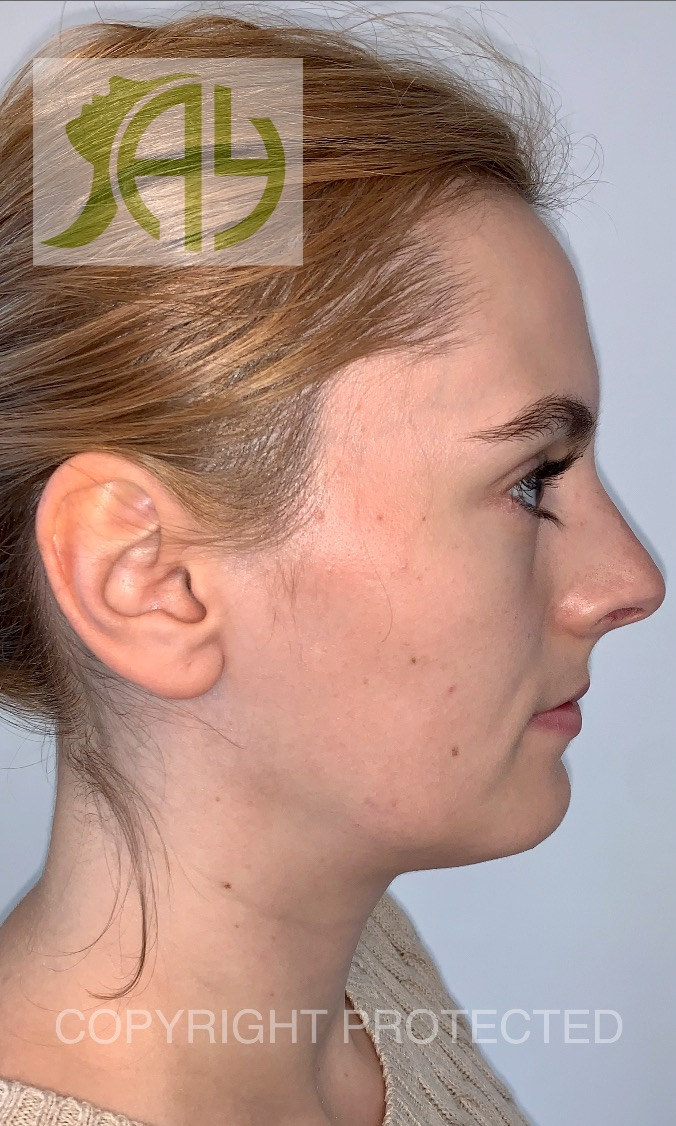
Photos of patients operated on by Dr Yousefpour, before and after bimaxillary surgery or lower jaw advancement, are shown on the Orthognathic surgery page. Each result is specific to the patient and their anatomy.
Frequently asked questions
Is orthognathic surgery cosmetic surgery? No. It first corrects a functional problem: chewing, bite, breathing, joints. The improved balance of the face is a consequence, taken into account from the planning stage.
Can I ask for a specific change to my profile? You can express your wishes, and they are taken into account. But the position of the jaws is first dictated by how the teeth meet. The 3D simulation shows what can be achieved within that framework, and a genioplasty can refine the chin.
Will I look older or younger? Moving the jaws forward supports the cheeks, lips and the skin of the neck, which often gives a younger, firmer look. Moving back a jaw that sits very far forward, on the other hand, calls for careful planning so as not to age the face.
In summary
- Jaw surgery makes the face more balanced without changing your identity.
- The profile, chin, lips and smile are the areas that change most.
- 3D simulation in Dolphin Imaging lets you see the direction of the change before deciding.
- The result takes shape after 4 to 6 weeks and becomes final after a few months.
For all the stages of treatment, read Orthognathic surgery: the stages of treatment, from assessment to result.
This article is general information. Only a consultation can determine the right treatment for your situation.