
Sinus lift: procedure, recovery and timeline
Sinus lift before an implant: why it is needed, how the procedure works, pain, precautions afterwards, risks and the wait before the implant.
By Dr Afshin Yousefpour, oral and maxillofacial surgeon, Consultant Specialist (UK), FRCSEd · Published on 5 November 2026. See his background
A sinus lift, or sinus floor elevation, makes it possible to place an implant at the back of the upper jaw when there is not enough bone height. The procedure often sounds daunting because it involves the sinus. In practice, it is done under local anaesthetic, with no hospital stay, and recovery is usually straightforward. Here is how it works.
Why is a sinus lift needed?
Above the upper premolars and molars lies the maxillary sinus, an air-filled cavity lined with a thin membrane. After these teeth are lost, two things happen together:
- the bone of the ridge shrinks from below;
- the sinus enlarges downwards.
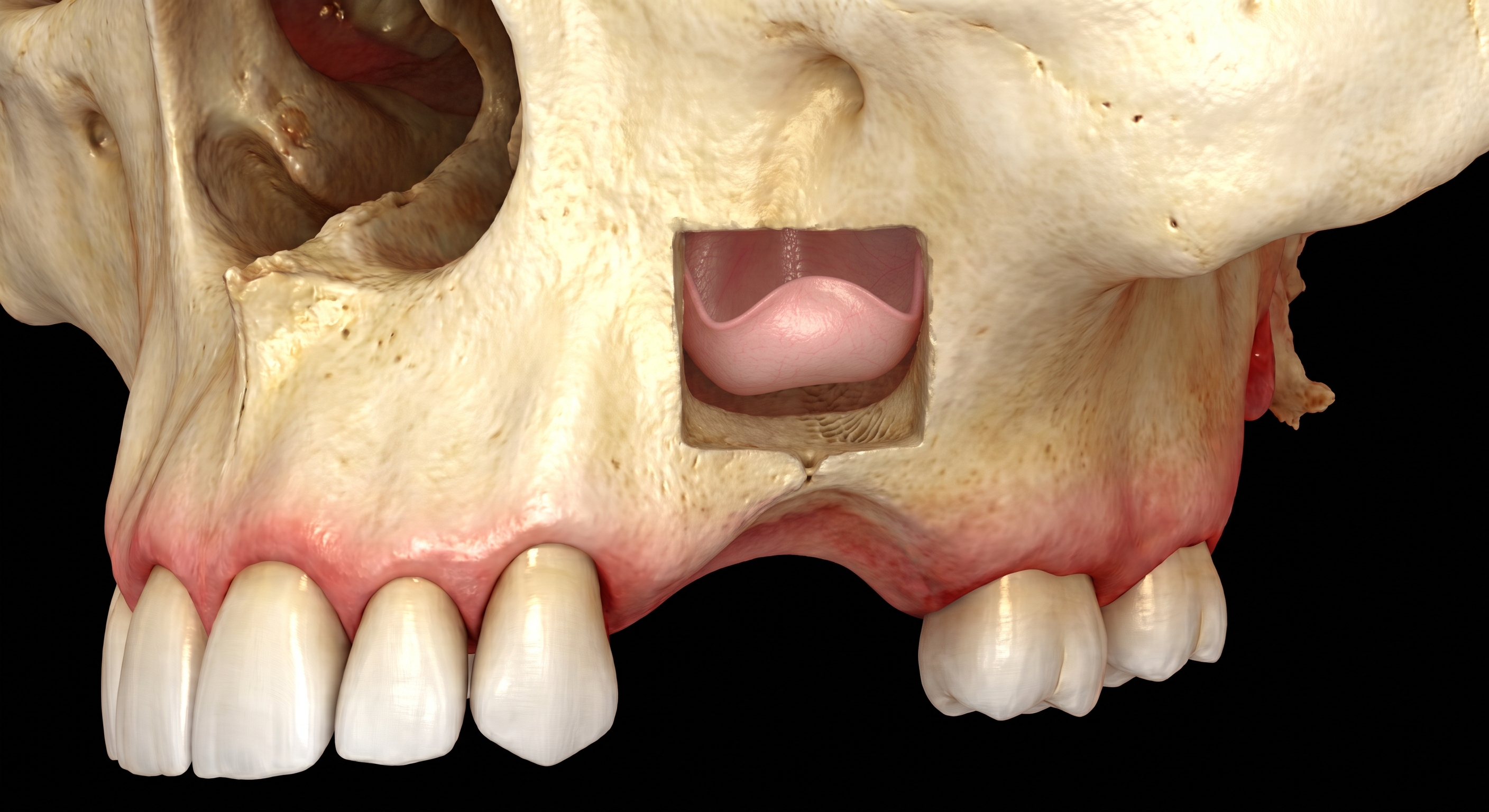
Sometimes only a few millimetres of bone remain, too little to anchor an implant. A sinus lift consists of lifting the sinus membrane and filling the space created, to restore the bone height needed.
Two techniques
Through the ridge ("closed" sinus lift): when only a little height is missing, the membrane is lifted through the very hole where the implant will be placed. The implant is usually placed at the same time.
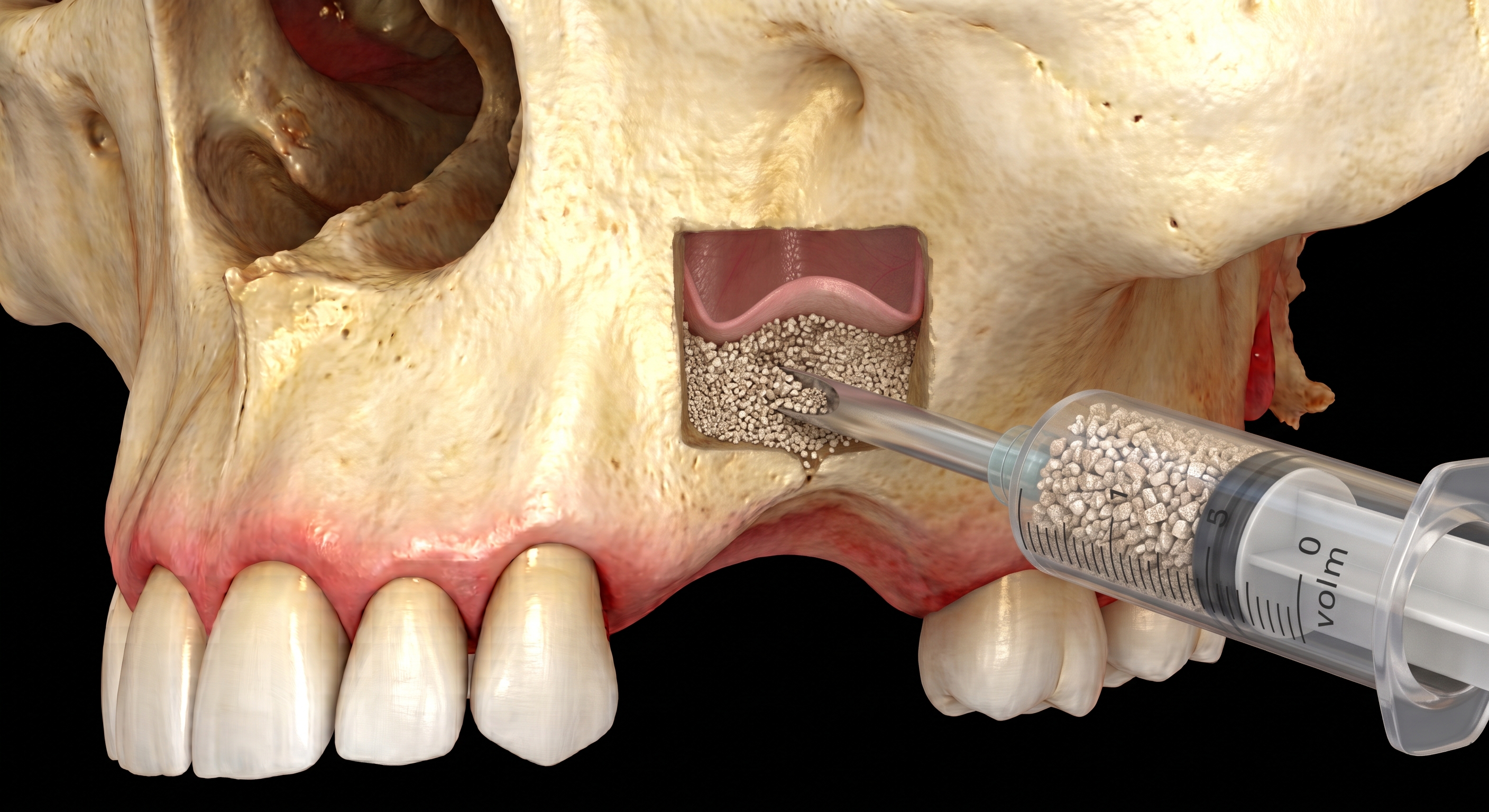
Through the side ("open" or lateral sinus lift): when more height is missing, a small window is opened in the bone wall, above the missing teeth. The membrane is freed and lifted, then the space is filled with bone substitute. The implant is placed at the same time if the remaining bone allows it, otherwise after maturation.
The choice is made on the CBCT: it measures the remaining bone height, the thickness of the wall, any partitions in the sinus and the condition of the membrane.
The procedure
| In practice | |
|---|---|
| Duration | 45 to 75 minutes |
| Anaesthesia | Local, sedation possible |
| Hospital stay | No, home the same day |
| Wait before the implant | Implant at the same time, or after 4 to 6 months of maturation |
You feel no pain during the procedure. The bone window is cut with piezosurgery, an ultrasonic technique that cuts bone while sparing soft tissues such as the sinus membrane.
Recovery: what to expect
- Swelling of the cheek, sometimes up to below the eye, peaking around the second or third day.
- Possible bruising on the cheek, which fades in one to two weeks.
- Discomfort rather than pain, controlled with ordinary painkillers.
- A slight nosebleed in the first few days is possible and harmless.
Most patients go back to office work after 2 to 3 days.
Precautions for the first two weeks
During healing, pressure build-up in the sinus must be avoided, as it could lift the membrane or move the graft:
- do not blow your nose hard: simply wipe it;
- sneeze with your mouth open;
- do not use a straw or blow into a wind instrument;
- avoid flying and diving for the period Dr Yousefpour indicates;
- do not smoke;
- avoid intense sport in the first week.
Treatment (antibiotic, nasal decongestant, mouthwashes) is often prescribed. Written instructions are given to you on the day of the procedure.
The risks
They are explained in detail at the consultation. The main one is a tear in the membrane during the procedure. In most cases it is small and repaired immediately with a protective membrane. More rarely, an infection of the graft or sinusitis can occur. The 3D assessment beforehand makes it possible to detect existing sinusitis, which must be treated before the procedure.
The information and consent form is available in the patient resources.
Frequently asked questions
Is a sinus lift painful? It is often less painful than patients imagine. Swelling is the main inconvenience, and it decreases after the third day.
Can I get sinusitis after a sinus lift? It is possible but uncommon. Chronic sinusitis or a significant allergy should be mentioned at the assessment.
Is there an alternative? Depending on the remaining bone height, a short implant can sometimes avoid a sinus lift. For a severely shrunken upper jaw, zygomatic implants are another option. Read Not enough bone for a dental implant: what are the options?
In summary
- A sinus lift restores bone height under the sinus so that an implant can be placed at the back of the upper jaw.
- It is done under local anaesthetic, in 45 to 75 minutes, with no hospital stay.
- Recovery usually amounts to a few days of swelling.
- Do not blow your nose hard or fly during healing.
- The implant is placed at the same time or after 4 to 6 months.
All the information on the procedure at the Waterloo practice is on the Sinus lift page.
This article is general information. Only a consultation can determine the right treatment for your situation.