Broken nose: when and how to correct a nose deformed by an injury
Broken or crooked nose after a blow: what to do straight away, when to operate, and why the first operation must treat both shape and breathing.
By Dr Afshin Yousefpour, oral and maxillofacial surgeon, Consultant Specialist (UK), FRCSEd · Published on 10 November 2026. See his background
A blow to the face during sport, a fall or an accident, and the nose is no longer straight. Sometimes it is crooked, sometimes a hump has appeared, and often you breathe less well on one side. Two situations are very different: just after the injury, and months or years later, once the nose has healed in the wrong position. In both cases, one point is essential: if your nose has never been operated on, the first operation is a primary rhinoplasty, and it gives the best chance of a lasting result.
Just after the blow: what to do
A broken nose often bleeds and swells quickly. The swelling can hide a deviation for several days. You should be seen:
- urgently, if bleeding does not stop, pain is very severe, your vision is affected, or the face has had a violent injury;
- promptly, if the nose looks crooked or you are breathing poorly.
A septal haematoma, a collection of blood inside the nose, is an emergency: it must be drained straight away to protect the cartilage. Only an examination of the inside of the nose can detect it.
When the nasal bones are displaced, they can often be set back into place without an incision in the days after the injury, once the swelling has gone down and before the bone heals. This corrects the position of the bones; it does not always fix a deviated septum.
Months later: post-traumatic rhinoplasty
If the nose has healed crooked, it will not straighten on its own. It is corrected with a post-traumatic rhinoplasty, usually a septorhinoplasty that treats both the look of the nose and breathing. It is planned once the bone has healed and the swelling has fully settled, usually several months after the injury.
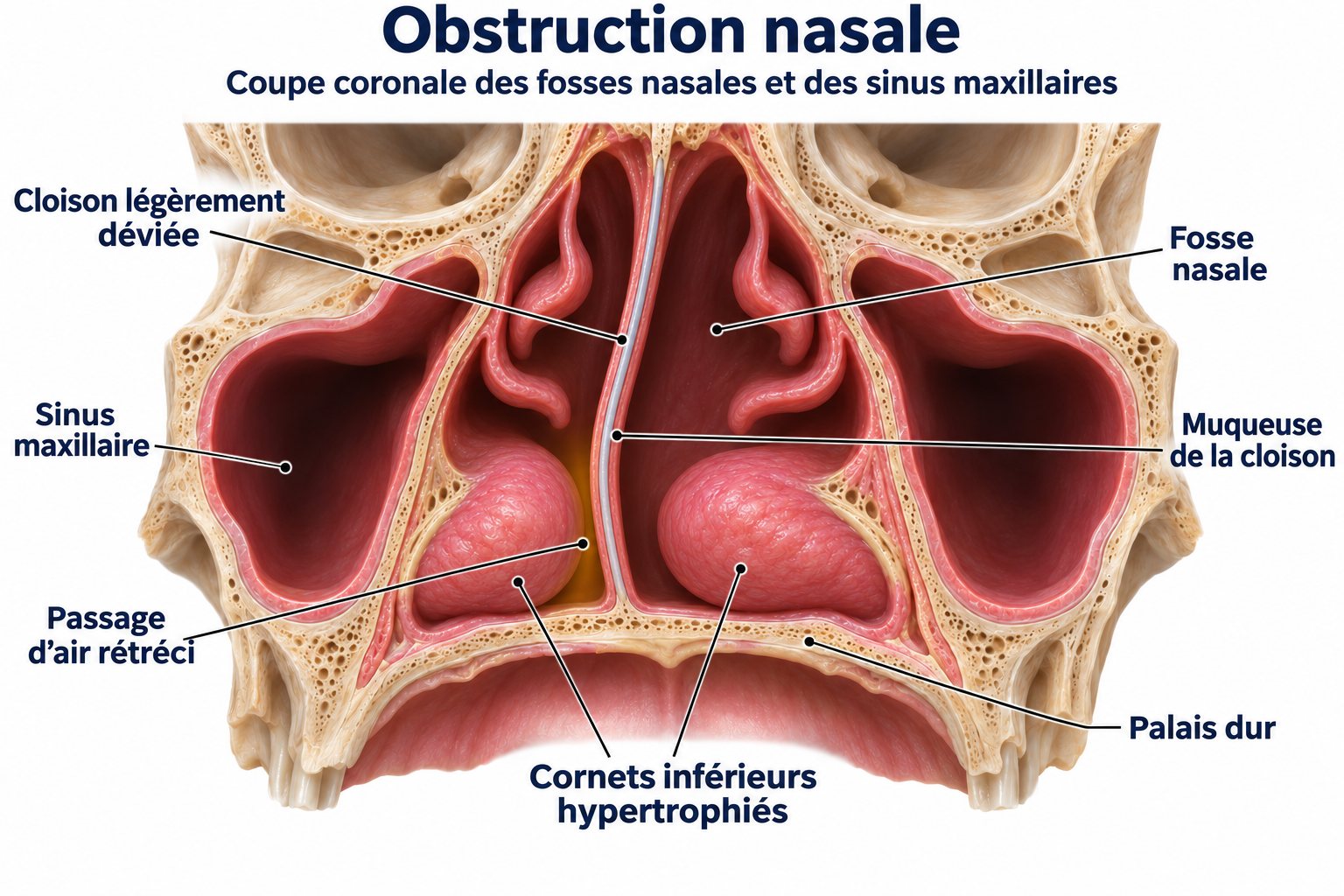
A broken nose is rarely "just" crooked. The injury often affects several structures at once:
- the nasal bones, displaced or pushed in;
- the nasal septum, fractured or deviated, which blocks the airflow;
- the cartilages, which may have lost their support;
- the nasal valves, whose collapse makes breathing worse.
Why the initial diagnosis is decisive
This is where the first consultation makes all the difference. Correcting only what can be seen, a hump or a deviation, without treating the septum and the nose’s support, leads to two problems: breathing that stays poor, and a deviation that comes back over time, through cartilage memory. The patient then faces a revision rhinoplasty, on a nose that now has scar tissue and is harder to correct.
Dr Yousefpour’s assessment therefore includes:
| Assessment | What is examined |
|---|---|
| Functional | Examination inside the nose: septum, turbinates, nasal valves |
| Skeleton | Position of the nasal bones and, if needed, imaging |
| Aesthetic | Photographic analysis of the profile and front view |
| The whole face | How the nose relates to the forehead, jaws and chin |
As a maxillofacial surgeon, he also knows injuries to the rest of the face: a blow that broke the nose may have affected other bones, such as the eye socket or cheekbone, and this needs to be checked.
The operation
| In practice | |
|---|---|
| Duration | Usually 1.5 to 2.5 hours for a first operation |
| Anaesthesia | General |
| Hospital stay | Day case or one night |
| Splint | 7 to 10 days |
| Time away from social life | 8 to 10 days |
| Final result | Between 9 and 18 months |
Dr Yousefpour straightens the septum and treats the turbinates to restore symmetrical airflow, repositions the nasal bones and, if needed, rebuilds cartilage support with grafts taken from the patient. The aim is a straight nose that breathes well and stays stable over time.
Reimbursement: keep a record of the injury
When examination confirms documented after-effects of an injury or a deviated septum that obstructs breathing, the functional part of the operation (septoplasty, fracture reduction) may be partly reimbursed by INAMI and your health insurance fund or hospital insurance. The purely aesthetic part is your responsibility and is subject to 21% VAT.
So keep everything that proves the injury: the emergency department report, X-rays, and photos of your nose before and after the blow.
Frequently asked questions
My nose was broken years ago. Can it still be corrected? Yes. An old deformity is corrected with a post-traumatic rhinoplasty, however long ago the injury was.
Why not simply straighten the nose without touching the septum? Because the septum is often the cause of both the deviation and the breathing problem. If it is not treated, the deviation tends to come back and breathing does not improve.
My nose was already set in the emergency department but is still crooked. Is this a revision? Setting the nose without an incision is not a rhinoplasty. If your nose has never been operated on, the correction is still a primary rhinoplasty.
Can the shape of the nose be changed at the same time? Yes. The operation can combine functional correction with an aesthetic improvement, discussed at the consultation. Only the aesthetic part is your responsibility.
In summary
- After a blow, be seen promptly; a septal haematoma is an emergency.
- Displaced nasal bones can often be set back in the days that follow.
- A nose that has healed crooked is corrected with a post-traumatic rhinoplasty, usually a septorhinoplasty.
- Treating the septum and the nose’s support at the first operation prevents the deviation from returning and a revision from being needed.
- The functional part may be partly reimbursed: keep proof of the injury.
To understand why the first operation is so decisive, also read Primary rhinoplasty: why the first nose operation matters most. All the information is on the Rhinoplasty page.
This article is general information. Only a consultation can determine the right treatment for your situation.